
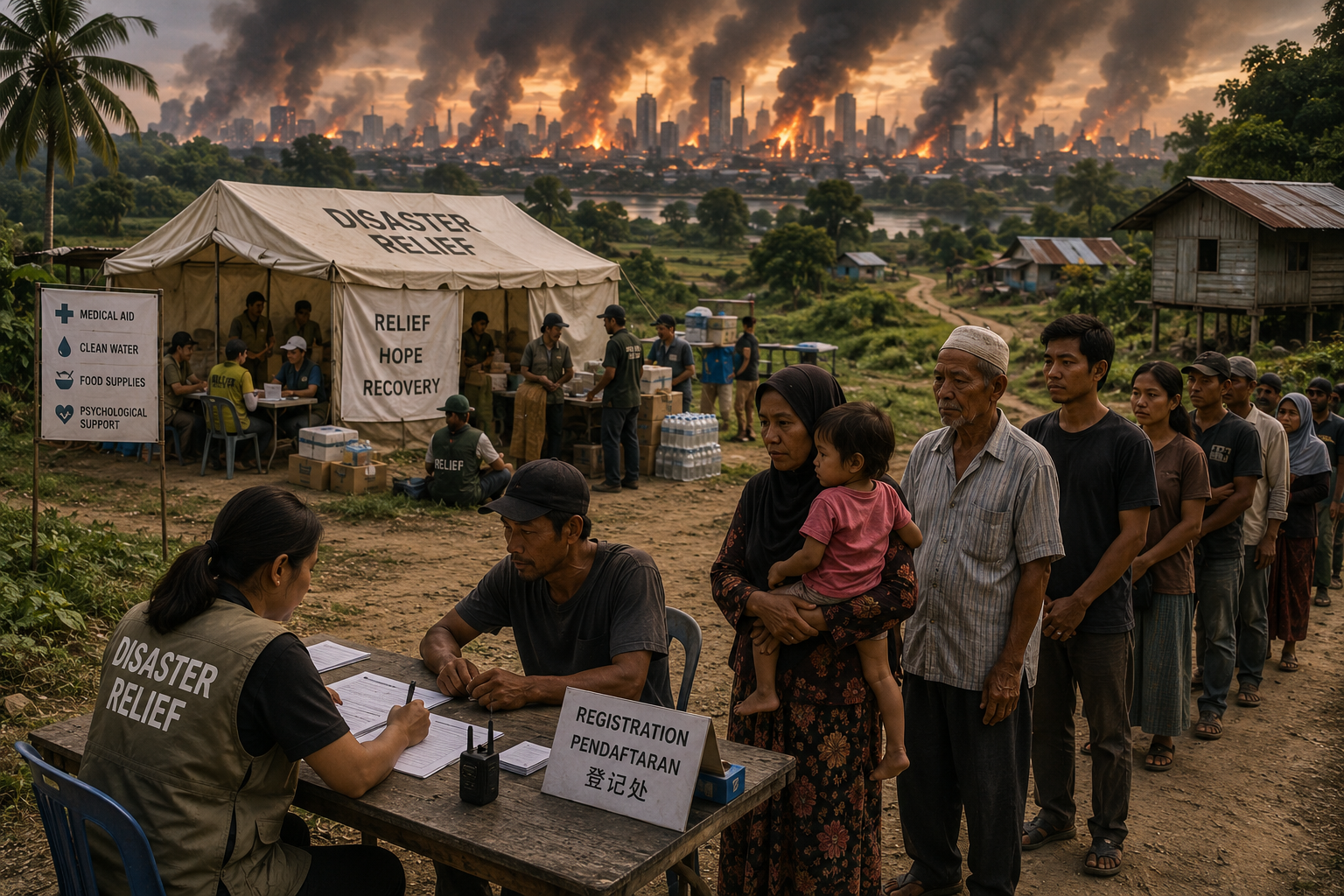
Natural disasters are a common feature on this planet. If it’s not a hurricane, it’s an earthquake, a volcanic eruption or a tsunami. Granted, most occurrences are relatively minor. Countries that are hit can deal with the damage by themselves – and would prefer to do so. But on the occasion that a natural disaster does bring a country to its knees, assistance pours in from everywhere. Some is sent by foreign countries, some by volunteer organisations, but often it’s not out of a sense of responsibility but that of compassion. Yet there are also opportunities to be exploited in adverse situations.
I prefer to think that countries with the resources and expertise to spare help their neighbours not out of obligation but out of compassion. Obligation – or responsibility – suggests a quid pro quo arrangement. Countries being under a mutual agreement, binding or otherwise, help each other out should the need arise. If our fellow ASEAN neighbour suffers a natural disaster, of course its fellow member states would send search and rescue teams, medical assistance and other resources like daily necessities to help the victims. Here the motivation is part contractual, but also instinctive neighbourliness. The Acheh quake, for instance, saw ASEAN spring into action with such assistance.
Still, when Szechuan suffered a devastating earthquake, many countries not part of any bloc with China sent assistance without obligation, though the fact that China manufactures most of the world’s consumer goods might have had something to do with it. Likewise when Fukushima suffered immense damage from the Boxing Day tsunami, despite Japan being a wealthy country, many other countries sent assistance anyway. Perhaps it was that some nuclear infrastructure was also damaged, that some self-interest added to the motivation to assist.
Where responsibility comes in, though, is not in the motivation to help but rather in the manner in which help is provided. Like how airlines always advise that in an emergency, adults should don their oxygen masks first before they help children, countries need to ensure that they are already self-sustaining before they help their stricken neighbours. What help they provide needs to be carefully assessed and budgeted according to the need, otherwise their presence at ground zero would be more of a hindrance than a help. If non-government organisations insist that private donations towards disaster relief needs to be genuine, usable necessities and not garbage conveniently dumped and forgotten, state assistance should at least match or better the same standards.
Yes, self-interest does play a role in provisioning disaster relief. Apart from worrying about nuclear contamination, countries gain diplomatic kudos from being neighbourly. By showing up with a friendly helping hand, countries build trust and a bond, signifying that we are in this together. Helping in times of need forges a relationship that – we hope – becomes stronger in better times, taking the form of regional or international cooperation, defence and trade. And sometimes to smooth over previous squabbles like over water agreements, or a small-scale attempt at instigating an insurrection way back in our shared history.
Ultimately, though, it is the responsible thing to do to withdraw assistance when it is no longer required. The idea is to help a stricken neighbour back to its feet and leave, instead of trying to stoke a dependency or force an obligation out of the assisted country. Many African countries are still in relatively dire straits as certain other countries have found it in their interest to keep them indebted to previous famine relief. In this way, they are locked in constant hunger and conflict while their natural resources are harvested and bound for foreign markets. Of course, this is just idle speculation on my part as I have zero evidence to back up this observation. No, sir!
An archaeologist once observed human bone remains that have shown signs of long-term healing and concluded that compassion was humanity’s most defining trait. I believe it. When countries see another country in trouble, the first instinct is to help. But people and their relationships are complicated. Beyond compassion, lending assistance is more about advancing self-interest than about responsibility. The most responsible thing to do in helping others is to not overstay your welcome.
And, you’re welcome!
(701 words)
Inspired by Singapore-Cambridge GCE ‘A’ Level H1 General Paper (Paper 1) 2025 Question #6