
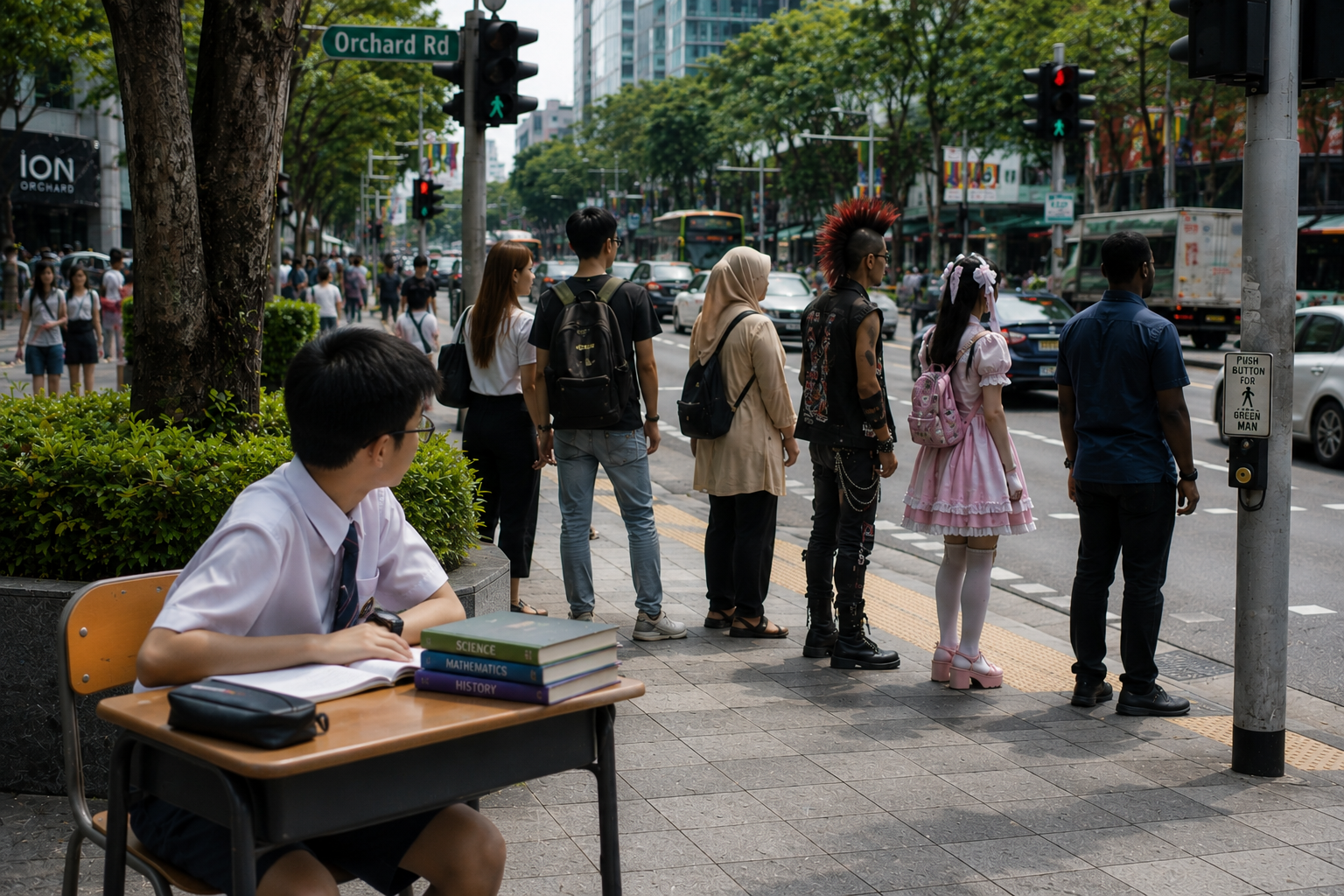
If we only use facts for winning wagers over drunken booze fests, then, sure, learning facts has indeed become obsolete. Unfortunately for the kiddies still stuck in 10-12 years of education, they are still going to have to learn at least the basics of human knowledge that have not fundamentally changed in the last 200 years or so.
I remember the trauma of having to memorise my multiplication tables back when I was young. To me, they were meaningless facts – a series of numbers that neither rhymed nor reasoned beyond avoiding physical or verbal abuse upon a failed recitation. But then the electronic calculator eventually became an affordable pocket tool that told me that 7 X 8 = 56 without any mental effort of my own. Sadly, for me, too little too late.
Society is built on numbers. Weights and measures, currency, 1st and 2nd place. Society is likewise built on facts, or blocks of information which all members of society believe to be true. These facts include scientific principles like gravity, temperature and pressure which we personally verify in scientific experiments in school. Geography so that we can plot where we are going. History which is a consistent touchstone reminding us that despite our diversity, we share a common, if complicated past from which we are still learning to do better by each other.
If we all share a similar 10-12 years of education learning these basic facts, we all have a common understanding – at least at foundational level – of how our realm operates. We may disagree over different ideologies, theologies and value systems, but knowing something in common can get us to the negotiation table and speak of our perceptions using common points of reference. Coming to the table with equal knowledge means that despite our differences, we can still speak to each other as equals.
I’m, of course, being idealistic. The world does not share a common pot of common facts. Ideology, allegiances and personal biases curate specific facts that support their own positions. Much of what is taken as ‘fact’ is based on interpretation and often becomes different hills different people choose to die on. Republican against Democrat. Tory against Labour. PAP against Opposition. Religious faction against religious faction against secular positions.
But now that information is easily accessible online, things have probably become worse. Facts rely on authority. With online space being accessible to both reader and author, anyone claiming Author-ity – with or without verification – will likely find a people group willing to subscribe to their authority as long as the ‘facts’ published support their world-view. Anti-vaxxers, flat-earthers (whose existence, I believe, is only to troll globetards), and QAnon followers base their identities on ‘facts’ that are easily available online. And because the written word is so strong (even if it’s on the internet, of all things!), people believing in such ‘facts’ are much harder to convince that there is a common ground on which we can all feel less persecuted for our beliefs.
I’m sorry but very little information online can claim to be factual without thorough fact-checking against other corroborating sources. At best, we can consider such casually-accessed (i.e., Googled) information as transient factoids or trivia. Clearly, it’s nothing to reliably build a strong, cohesive society upon. Although facts are true – or taken as true – they are not in themselves isolated truths but truths that collectively glue a collective, a society, together. Whatever our differences may be, having learnt the same facts together through the authority of a school curriculum, or some other official source that society trusts, we still share a common platform that we disagree on without becoming disagreeable. But if we base our ‘facts’ on an ‘authority’ as chaotic as the internet, and once we lose common ground with each other, there is no more trust and society becomes bunkered and siloed.
At least factual information from a common, authoritative curriculum taught as ‘fact’ constructs the foundational belief for the next generation even as it bridges continuity with the previous. Growing up, it is inevitable that each individual will develop their own ideas and world-view, but we hope that what they learned together from young will stay with them. And remind them that they are still one people at heart.
(710 words)
Inspired by Singapore-Cambridge GCE ‘A’ Level H1 General Paper (Paper 1) 2025 Question #7