
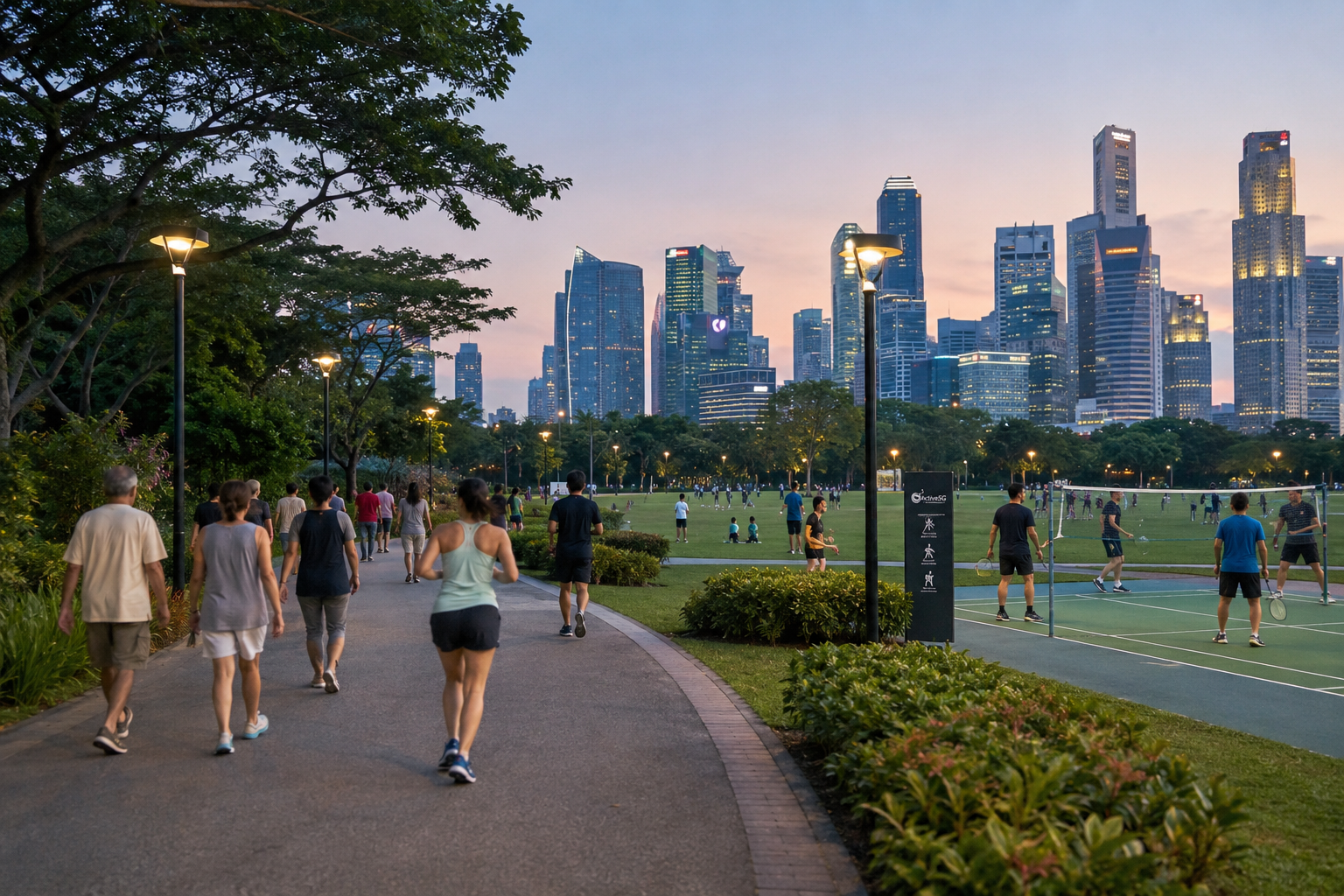
The concept of a healthy lifestyle places the responsibility of being healthy on an individual being disciplined enough to make the right daily choices in terms of diet, sleep and exercise. And look both ways when crossing the street. In this way, the individual can look forward to a long life with a lower risk of contracting a so-called “lifestyle” disease that often puts a damper on the festivities. Society, too, has a role and a responsibility to play in keeping its people healthy and active for as long as possible. It has to at least create and provide the environment within which people can be healthy. Considering how Singapore has declared another increase in local life expectancies, as a society, it’s doing pretty well in this regard.
What is the importance of a healthy lifestyle?
Developing good daily habits that keep us individuals hale and hearty is one of the more important life choices we can make. After all, if we’re going to spend anywhere from eight decades to a century alive, we’d like them to be generally happy and free of pain. Maintaining our health is a key factor in doing so. Although being disciplined in making healthy decisions is a pain in itself – choosing to eat health-giving foods in moderation, being active in working up a sweat and putting aside our worries and stress of the day for a good night’s sleep – the payoff is worth it all. It does not mean that we cannot indulge ourselves once in a while, but conscientiously maintaining these daily habits means that when we do indulge, the cost to our bodies amounts to less, in the long run, than if we indulged all the time.
How is living a healthy lifestyle a challenge?
Human beings are unfortunately tasked, or cursed, with the requirement to work for a living. Work can occupy us for much of the day’s 24-hour cycle. Some of us prioritize making more money and so choose to spend more time at work trying to be productive. Such habits of working long hours with few breaks, hastily eating junk food at our desks and returning home too exhausted to socialize meaningfully, yet sleeping fewer hours than recommended constitute a pattern of behaviour that to us Singaporeans, is both familiar and something we tend to regret later in life. Being sedentary for long periods of time causes our metabolism to decrease, our posture to deteriorate, our muscles to atrophy, our cortisol levels to spike and we eventually get testy, impatient, and at some point start wondering what we were meant to live for. Changing our daily habits is likely to reverse these undesirable outcomes, though it starts with a decision to re-prioritize our working hours relative to everything else.
How does Singapore contribute to the citizens’ healthy lifestyle?
I know, easy to say. People have to work for a living. But then people also need to live to make their work worth the while. And Singapore at least provides the infrastructure for making certain healthy life choices easier. The environment is safe, clean and pollution is low for a city. Law enforcement is trustworthy, clean air makes it easier for cardio and aerobic exercise – whether a scheduled exercise regimen or simply commuting by walking or cycling between destinations in the neighbourhood. The Urban Redevelopment Authority (URA) and National Parks Board (NParks) work together to ensure an equitable mix of greenery with public infrastructure, ensuring that public spaces are both pleasant to stroll, jog, cycle or rollerblade through, while ample shelter – natural and constructed – keeps the worst of the rain and sun off our backs.
Furthermore, every housing estate has built-in sports and exercise facilities minutes’ walk away from residential units. Whether it’s pickleball, badminton, sepak takraw, or futsal, these facilities can be booked through an app at reasonable rates. The newer estates like Tengah will have their own sports hubs, like those already operating in Sembawang and Tampines. These are central locations in which many public sports facilities are located including swimming pools, basketball courts and fully equipped gyms along with their support and training staff.
Nutrition is affordable and available freshly cooked in our hawker centres with each individual stall monitored closely by the National Environment Agency (NEA) for hygiene and is visibly graded accordingly. Likewise, the Health Promotion Board (HPB) has published a voluntarily downloaded app that helps to monitor daily calorie intake and offer advice on food choices based on personal history. For people who prefer home cooking, groceries are kept affordable – there is a current, if temporary, price freeze going on in NTUC supermarkets while the Straits of Hormuz remains closed – and the more unhealthy options are clearly labelled as such. This way, people still maintain some personal autonomy regarding what they choose to eat while being informed that they could have made better choices.
Sleep, though, cannot be monitored or regulated by society without severe privacy violations. So Singaporeans are solely responsible for how much sleep they get daily. Yet, conditions like our long working hours, digital distractions and a culture that prizes productivity make sleep quite a challenge. Singaporeans report less sleep on average than most of the world and we have to slap an ‘Area for Improvement’ label on most individuals’ foreheads on this one.
How can Singapore residents LIVE a more healthy life?
Overall, Singaporeans can make use of much community support in living healthily. There are many programmes offered in our community clubs that cater specifically to group exercise, whether tai chi, or zumba with seated options for the more elderly of us, but more importantly it is through this opportunity to connect with our neighbours socially that we motivate each other to keep going while sharing our own life experiences and other health tips, modern and traditional. There are even programmes that support our mental health, like animal therapy, that are open to our foreign domestic helpers. Individually, though, it still boils down to our own responsibility to make the healthy choices for ourselves and stick with them for the duration. Our walking, jogging, cycling routes, public parks, and playing fields are safe, clean and mostly shaded so there is no excuse for some daily cardio; healthy food is affordable on demand; our water is safe to drink from the tap, and we have voluntarily downloaded apps from the health and sports authorities to respectively help us monitor our daily calorie intake and heart activity, and book sports facilities conveniently. A Singaporean’s health is well taken care of. Yet, we also show worrying numbers when it comes to obesity, burnout, stress, diabetes and other lifestyle-related issues. For us, a holistic suite of infrastructure and programmes catered towards healthy living is right there, so better health is only one good decision away.
(1302 words)
Inspired by Singapore-Cambridge GCE ‘A’ Level H1 General Paper (Paper 1) 2025 Question #8